Part 1 link can be found here https://south-india-splendour.travel.blog/2020/06/21/on-the-banks-of-pampa-part-1-anegundi/
Virupaksha Temple & Hampi
Tungabhadra, was earlier known by the name of Pampa, was also called as Hampa. The village on the Southern bank of the River was named after the river , as Hampi. This Village was pilgrimage centre of Shaivaites, the home to the Lord Virupaksha , an incarnation of Lord Shiva. According to local folklore, Devi Parvati was born as a Girl in the village of Hampi and underwent severe penance to win the hand of Lord Shiva. Lord Shiva, pleased with the penance, incarnated here as Lord Virupaksha and wedded Devi . Devi Parvati is known by the name as Pampa Devi, named after the river banks on which she grew up. Virupaksha Temple, is one of the oldest known Temple in this region, and the village of Hampi served as a Pilgirm centre.
The dawn of the 13th Century, witnessed a major turn in the Indian history. The Southern rulers had major in-fights among themselves, and the major dynasties were on a decline. None could claim a massive possessor of any huge land mass. In-fights and incumbent rulers had become too common. The North, then witnessed a change that the Indian region never witnessed before – “The advent of the Sultanate power in Delhi “ with the invaders from the North Western Region
The decline of major powers and split up.of territories under administrators proclaiming themselves rulers and the in-fights led to the power moving to the South in the later part of 13th Century . Mohammed- Bin- Tughlaq of the Tughlaq dynasty wanted to shift the capital from Delhi to south, as annexations brought in more territories in the South . But the move did not go on well, and the administrators were appointed in the Devagiri region for taking care of the Southern affairs. The annexation of the South by the Delhi power did not go well with many small rulers, owing to vast plunder and destruction that came along with the annexations, along with imprisonment and loss of independence to freedom of religion.
Harihara & Bukka were 2 brothers, who had been taken captive by the Delhi Sultanate , during the capture of Kampili Kingdom in the South. The brothers, who belonged to the court of Hoysalas earlier, moved to Kampili post the annexation of Hoysala power, but were captured during the capture of Kampili. In a view to subdue the revolt in the South and for appeasement, the brothers, were sent to South as errand by the Sultan to suppress the revolt and to enable the revolting kings join hands with the Delhi power
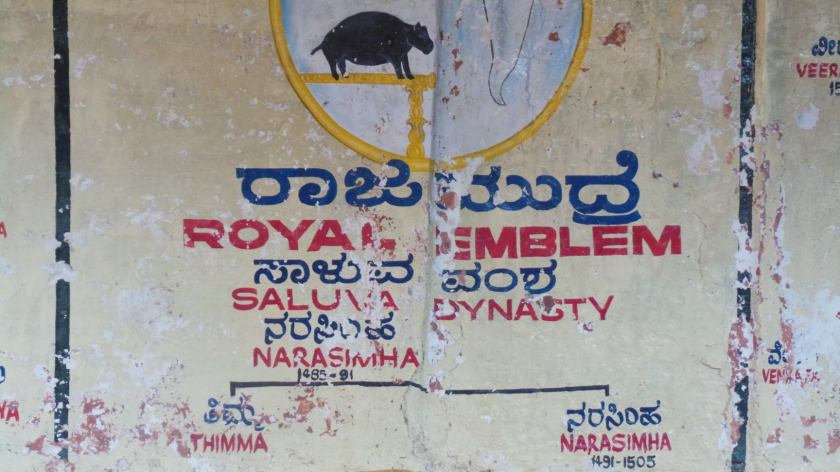
As per local tales, Harihara and Bukka initially complied with the errand and started gaining the confidence of the people. However, their meeting Sage Vidyaranya gave back their memories of who they actually were and how they were taken as prisoners from Kampili. The sage further, advised them to take the blessings of Shri Virupaksha at Hampi. The brothers visited the temple, and with further realization, shifted back to join the revolting kings , slowly winning their confidence and moving away from the Delhi sultanate. Harihara & bukka initially captured a few territories from control of Delhi powers and started their regime with capital at Gutti (Gooty, Andhra Pradesh) . Harihara coronated himself with the help of Bukka , as the King , at the Virupaksha Temple
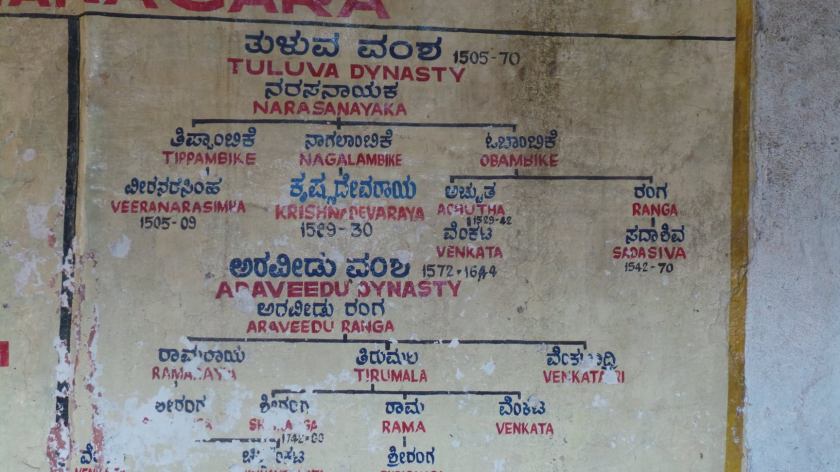
With further annexations of territories of South and the wealth flowing into the kingdom, they established a City of Victory – Vijayanagar at Hampi, as the capital of the Empire. As a mark of respect to Sage Vidyaranya, a nearby town in the territory was developed as Vidyanagar . This laid the strong foundation of the empire that was set to rule the South for 2 centuries, and a kingdom lineage for 4 centuries, under 4 different dynasties .
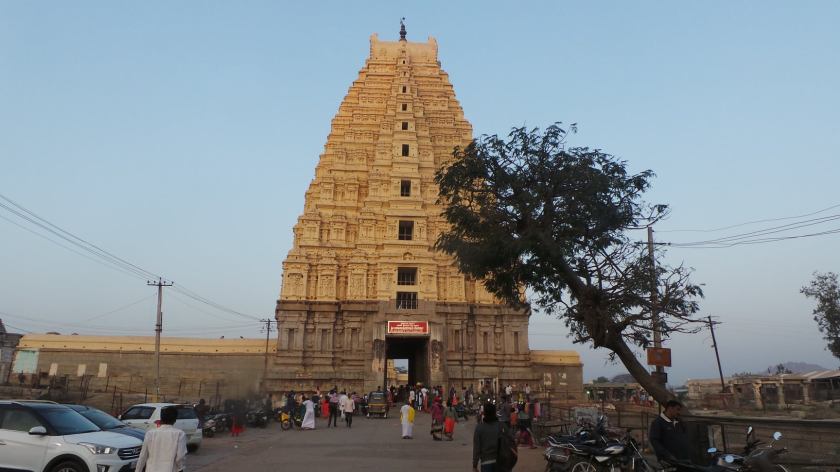
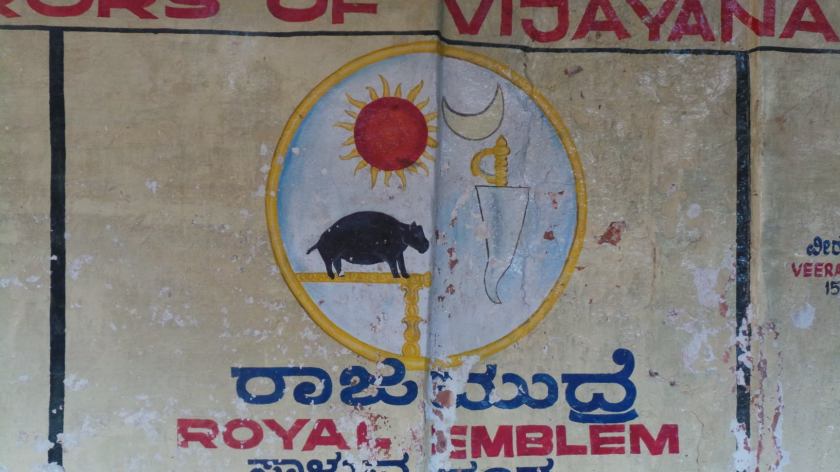
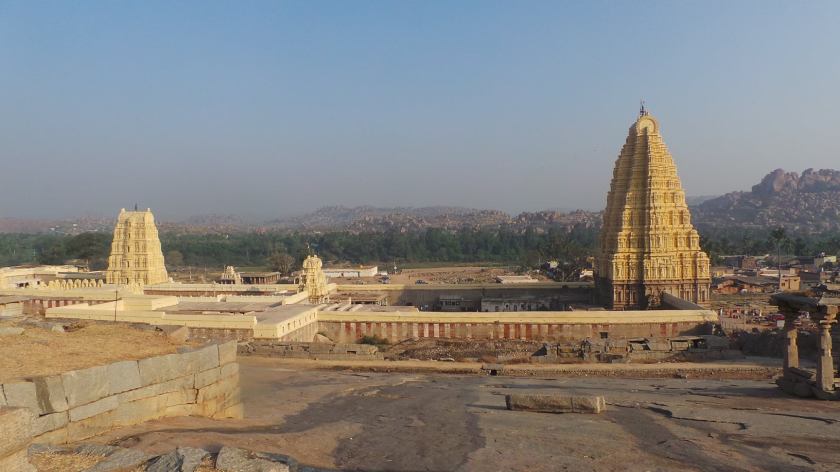
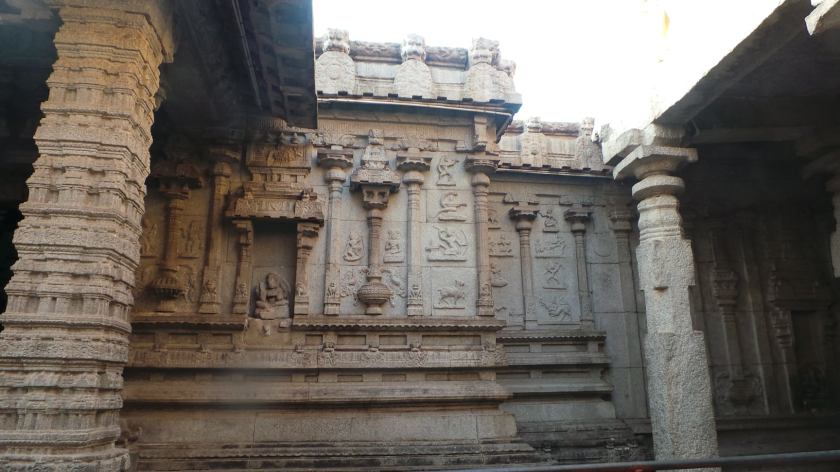
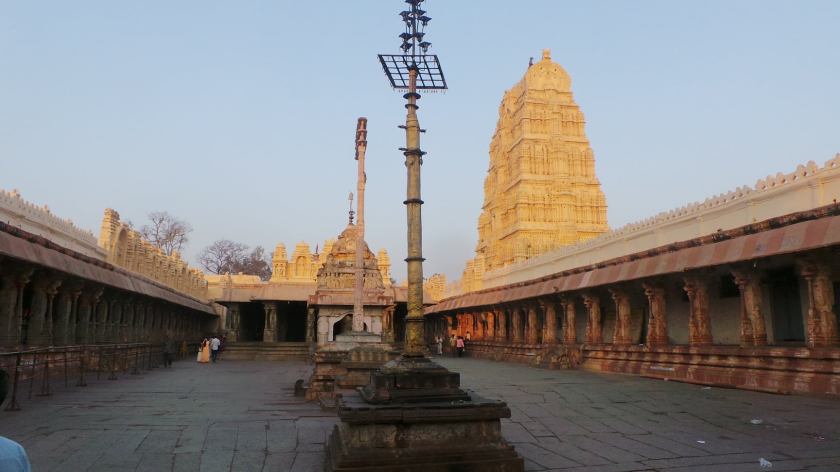
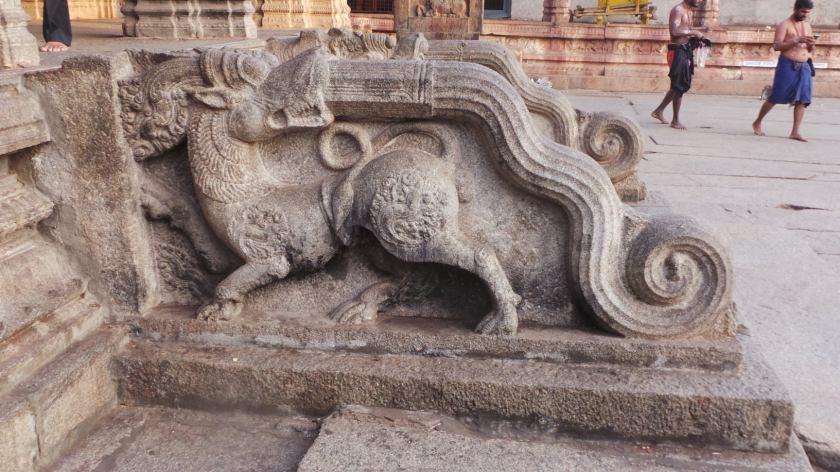
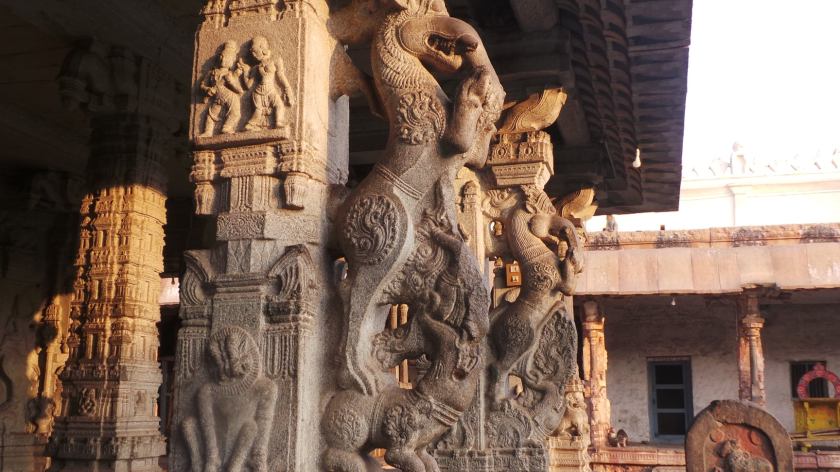
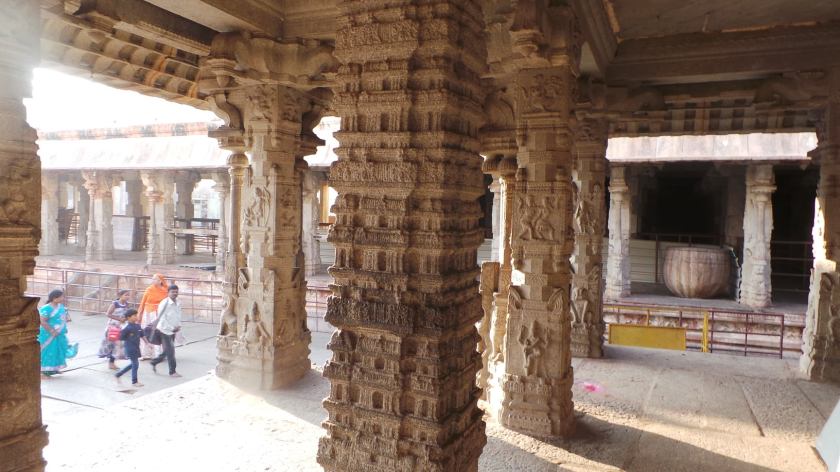
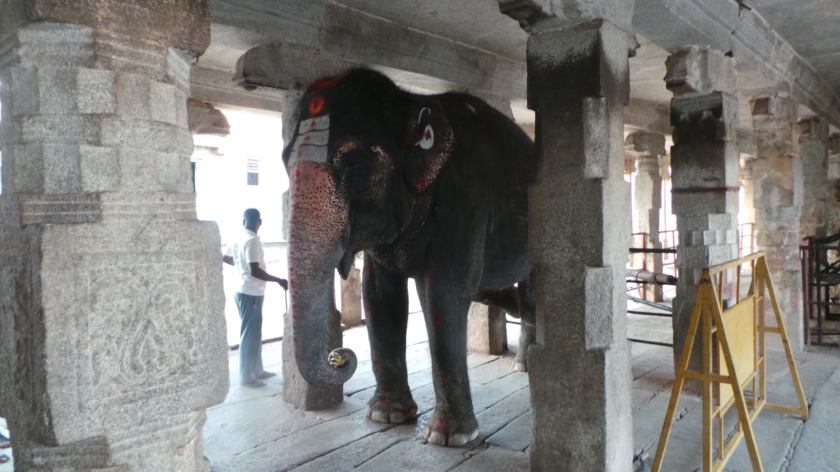
The Temple was of Virupaksha was an original structure built in the 7th Century structure , further on developed by the Vijayanagar empire , during the flourishing times, as the empire progressed. The Temple has a main structure dedicated to Lord Virupaksha and a separate Shrine for Pampa Devi. Both the shrines are well enriched with many sculptures adorning the pillars and the ceiling of the shrines. The Vijayanagar empire contributed to the main hall and the main gopura(Eastern) of the temple during the 14th & 15th century. The main hall of the Temple, has various pillars with sculptures depicting stories of Lord Shiva, his incarnations and the life of his devotees like Bedara Kannappa (Hunter Kannappa/ Kannappa Nayanaar). The main symbol of the Vijayanagar Empire was the Horse with a warrior on his back on a fight (horse with 2 legs in hair) , which can be seen depicted in all the exterior pillars of the main halls. The same sculpture has been spread across various temples in the South, which had been revived and restored under the administration of the Vijayanagar Empire. The Temple also has a Elephant stable near the Goupram of the Temple.
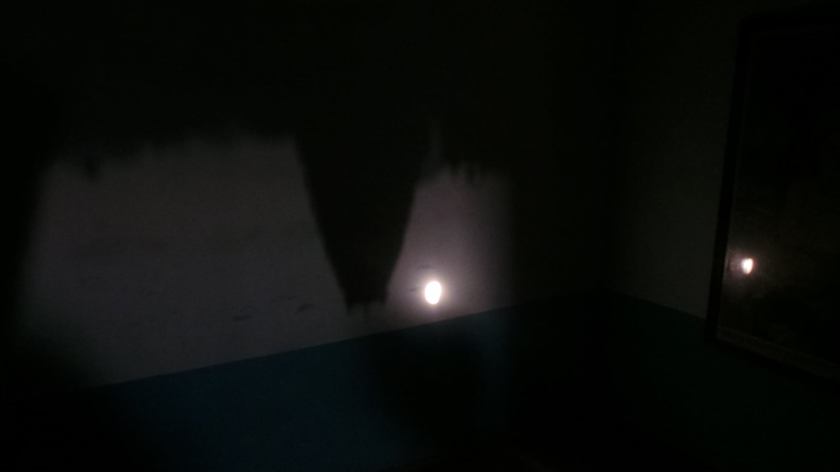
The Gopuram has of the temple has been designed to capture the rays of the early morning sun as it rises from the East. The early morning sun, gives an inverted shadow of the Gopuram on the rearmost wall of the Temple, till the time it moves up above the gopuram .
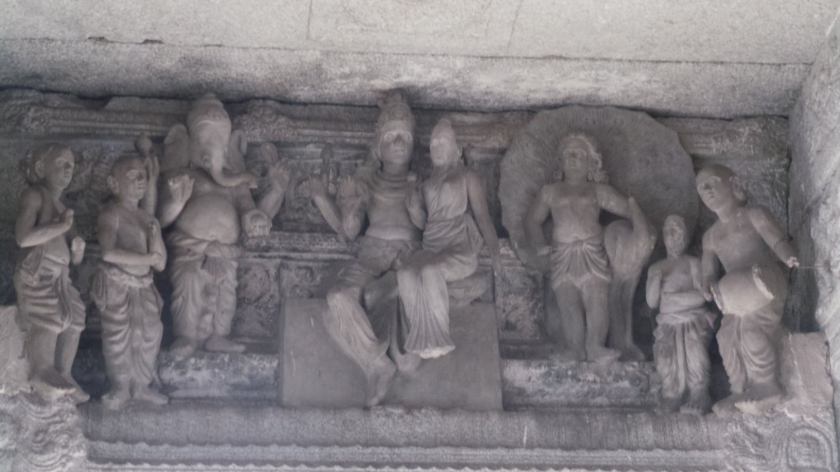
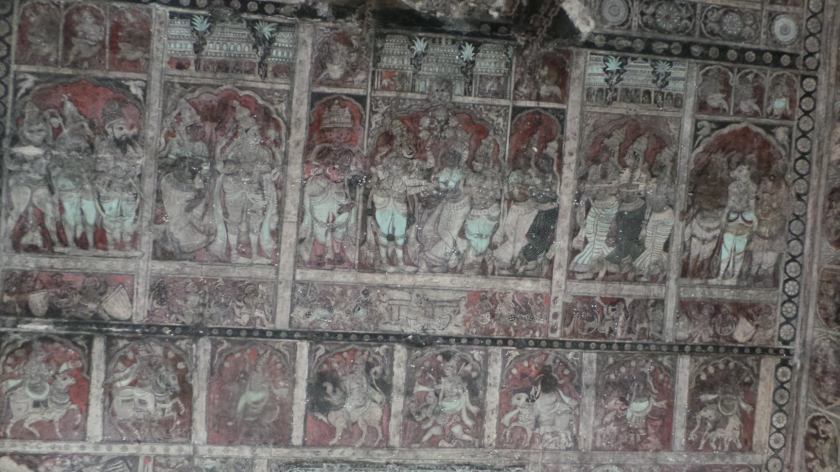
The main halls of the temple have various paintings and sculptures adorning the ceiling of the temple and the base below the ceiling at the end of the parallelogram. Some of these are relatable to the Vijayanagar period, while some more additions and modifications to the ceiling and ceiling sculptures have been made during the 19th Century . The Northern side gopuram of the temple, which faces towards the bank of the river was also believed to have been built around the 19th century.
In front of the Eastern Gopuram and right opposite the Temple is the Mathangi Hill, a huge boulder , which is famous for having a sunset view at Hampi . Further down, the street opens out to the street bazaar, a place of commercial exchange, with a lined stone structure finding its place across the corners. These structures for purpose of trade, are found in front of every temple that were constructed during the period of Vijayanagar.
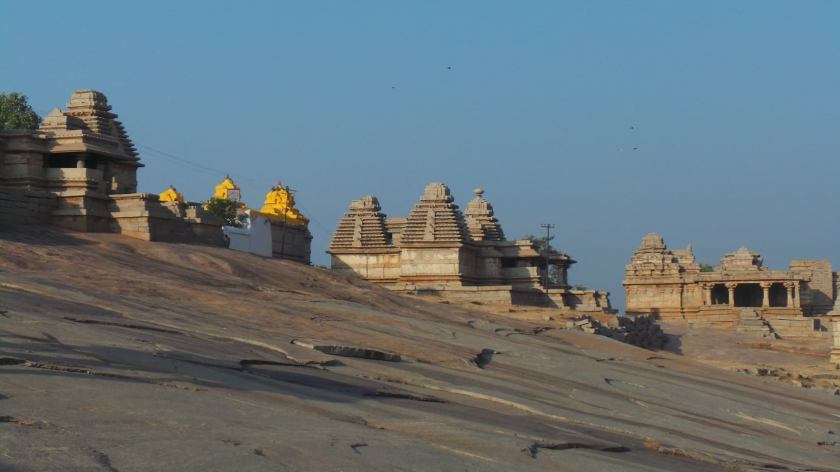
Right next to the Eastern Gopuram temple, is the Hemkunt hill, homing vertain monuments from the Kadamba era , popularly called the Kadamba group of temples. The opposite descent of the hillock, meeting the state owned road, homes the 2 major Ganesha Statues of monolithic rocks , the Kadlekkalu and the Sasivekaalu Ganesha
Kadlekaalu Ganesha
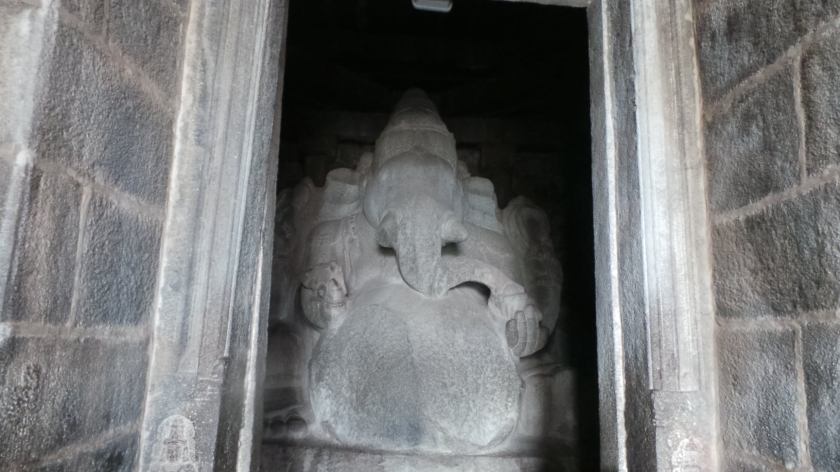
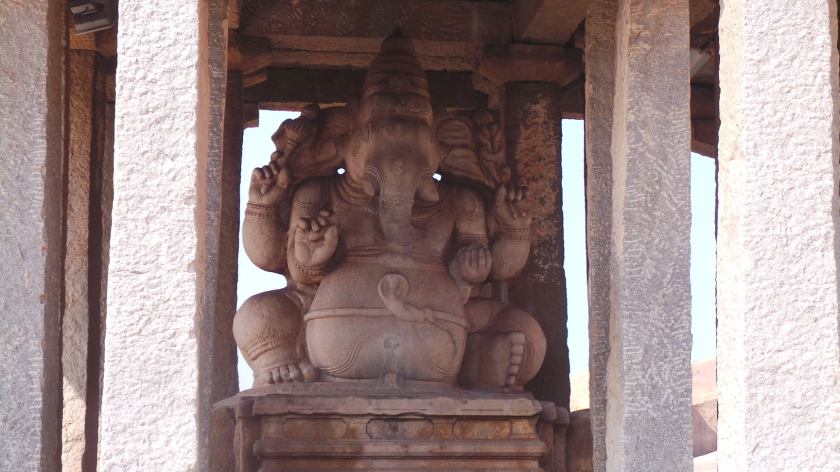
Kadalekaalu Ganesha is one of the largest statutes of Shri Ganesha in this region, and found towards the other sloping end of the Hemkunt hill. The statue of Shri Ganesha is about 4.8 metres tall and carved out of a single boulder . The statue is placed inside a pillared hall , built around the 16th century in the Vijayanagar period and is adorned with various carvings. The statue is called as Kadalekaalu Ganesha, as the belly of the statue resembles a Kadalekaalu or a bean of Bengal gram .
Sasivekaalu Ganesha
Sasivekaalu Ganesha, is yet another sculpture of Ganesha , with a single tusk, carved out of a single boulder, present towards the ending slope of the Hemkunt hillock , bordered by the road of state government. This statue is about 2.4 metres high and vears a bowl of sweets in his arms and a belt on snake . The status is also present in a pavilion , constructed by a trader in 1506 AD in rememberance of King Narasimha of Saluva Dynasty .
Apart from the above , the hill also homes various other abandoned structures which are used as photographic points. The hills also allow a complete view of the town of Hampi and offers some picturesque views of landscape around
Vijayanagar
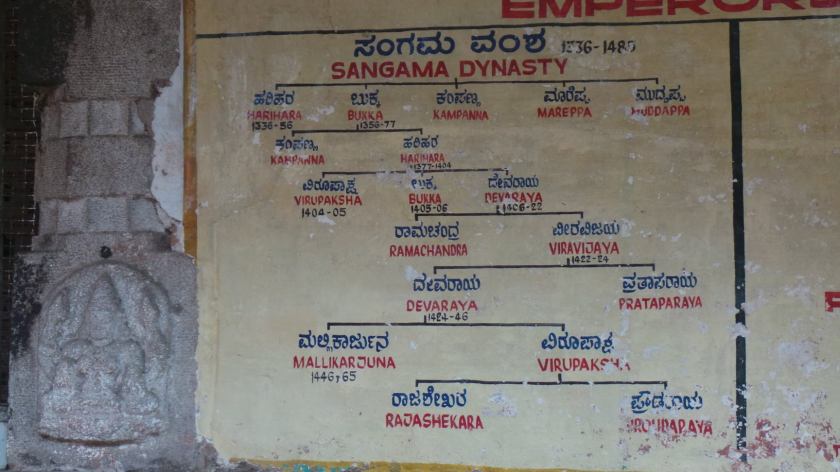
Vijayanagar, established as a Capital , was a fortified town surrounded by a long running wall across the town. The Town remained the capital , as the lineages ruling the Town kept changing and for a period of close to 200 years, the town developed as a hub for a prosperous trade, keeping invaders at bay. The presence of efficient Kings like Harihara, Bukka and Devaraya from Sangama dynasty, Saluva Thamma & Narasimha from Saluva Dynasty , and the most famous of all, Krishnadeva Raya from the Tuluva dynasty, gave the town and the empire the complete stronghold in the South. However, the prosperity of the town, was a major eyesore for the surrounding Kingdoms , who were earlier under administration of the Delhi Sultanate, but had established themselves as independent kingdoms following collapse of the Delhi Sultanate.
The rule of Krishnadevaraya, one of the most valliant rulers of the empire, from the Tuluva Dynasty , was a major problem for all the major kings, who waited for an opportunity to attack this town, now overflowing with the riches. Changes in the army structure and conspiracies among the teams started post the demise of Krishna Deva Raya in the late 1520’s . This proved to be a major opportunity for the neighboring attackers, who now joined hands to combat a battle against the Kingdom. The battle of Tallikotta in 1565, while the empire was under the Araveedu dynasty, proved to be disastrous to the empire. The Victory of the battle seemed to be in the hands of the Araveedu King , when one of his own armymen, who lured by the attackers, attacked the Ruler beheading him. This created a major confusion among the army men and soldiers and the Towno f Vijayanagar was left unguarded. The Town was plunged and plundered, in what was termed to be as one of the worst havocs of History, the entire town perished under the attack, leaving the prosperous town as a Ghost village.
An old English saying goes “Rome was not built in a day”. So was Vijayanagar, which took years to build and develop, but as they say “destruction is easy, creation is tough”, it was not very tough to destroy the prosperous town, which had devastated the town to anything but shambles. The Capital town was completely shattered, and the succeeding rulers were left with whatever other area was available outside the capital. The rulers tried to safeguard the remaining portions of the empire till the early 18th century , but the prosperous stronghold of the empire was a no match to what it lay to after the 16th century
The destructed structures:
The plundered town still stands tall as a remembrance of the flourishing empire that it was the capital of 4 centuries ago. The town has been considered as a World Heritage Site by the UNESCO , and the ruined structures have been excavated and maintained by the UNESCO with the ASI
A huge walled structure welcomes us inside the Town of Hampi along a watch tower, the entrance to which reveals nothing but a open ground. The rubbles around the ground, placed symmetrically and systematically across the ground, gives the evidence that this region was a residential area . With a presence of a destructed watch tower at the corner and a plundered band stand in the centre of the ground, the size of the symmetrically arranged rubbles, towering upto 2-3 layers of stone, gives it the basement of a huge palace structure. The recent board kept at the corner gives the name as Vira Harihara Palace, but the way the structure would have been erected and the prosperity it would have lived through leaves one to their own imagination.
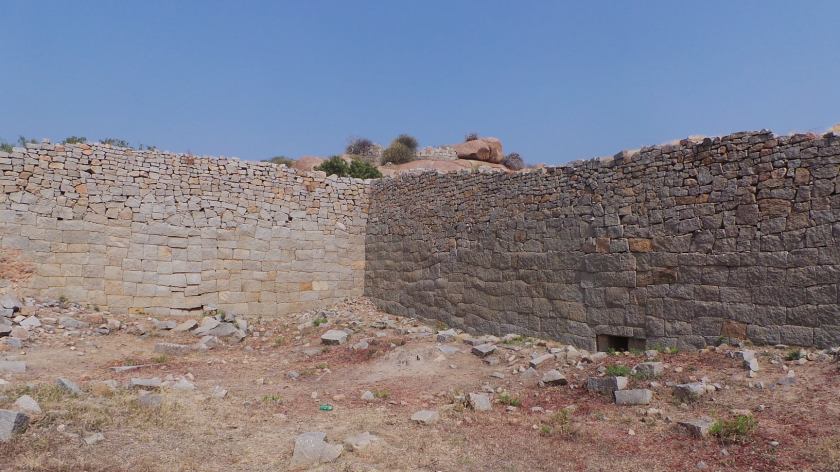
The walled structure that forms the compound of the palace is a 5 levelled stone structure that depicts elephants & mahouts at the lowermost level, horses at the 2nd level, soldiers in the 3rd level, indicating that wars have been a regular feature in this region. The 4th level has various dancers in their posers while the 5th level has people going about their daily routines. The recently erected board also indicates the presence of a mint area in the ground, but it is not clear as to which is the mint area among the rubble
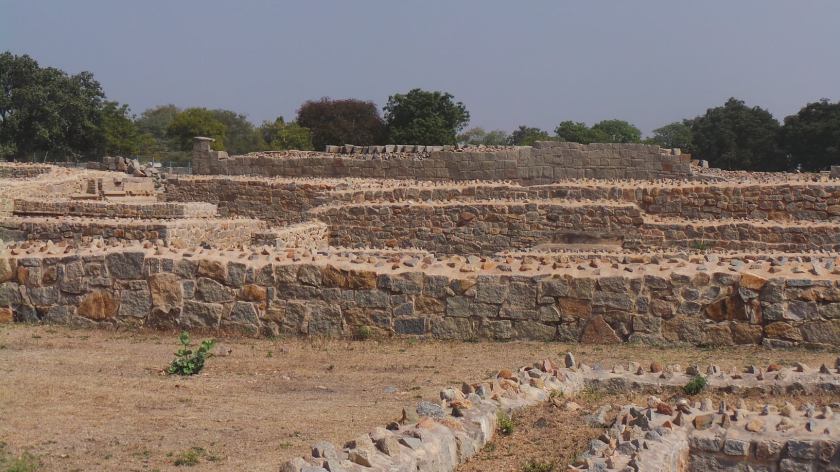
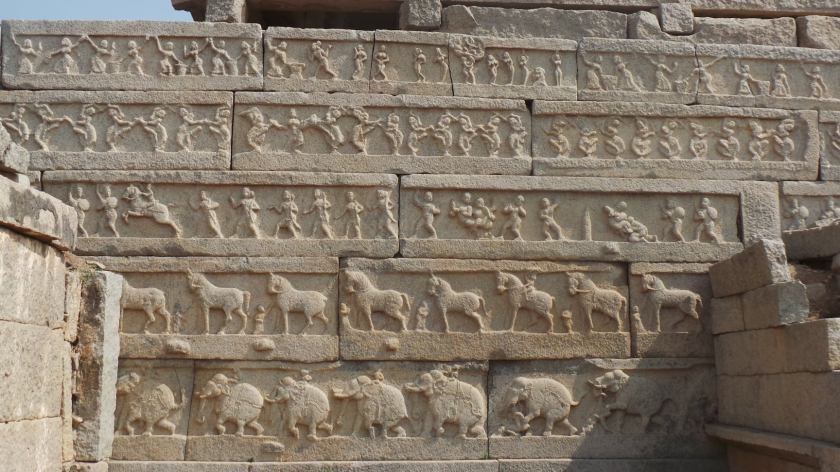
Another similar wall encounters us, not very far from the above area. However, this walled structure gives the impression of a fort. A walk through this gate brings us to a slightly different sight. The palace is not reduced to mere rubbles , but there is a 3 level stone structure, with a board erected as Queen’s palace basement. There is not much of the structure remaining , but the ruins give an idea of a magnificient palace that could have been here during the period when empire was at supremo . A watch tower at either ends, again in a dipliated condition, indicate the presence of the security in that period.
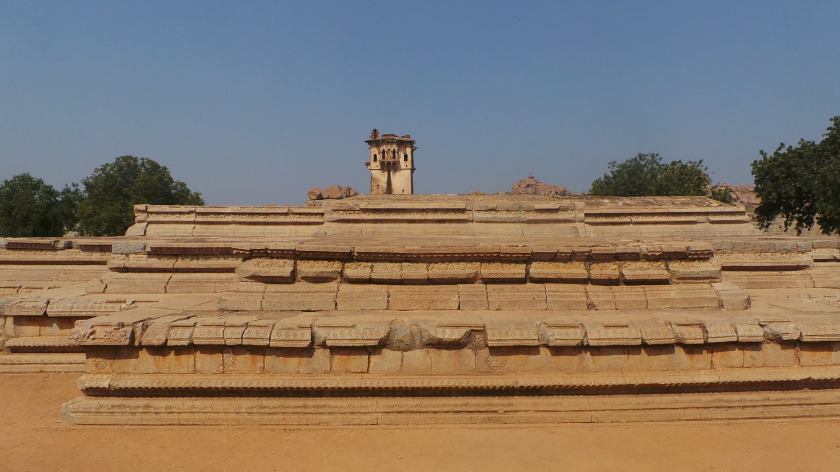
A further walk in the corridor, leads us to few structures, depicted in the Indo Islamic style of architecture. These structures, are currently in full structure, also gives an idea how the various forms of architecture would have merged during the period.
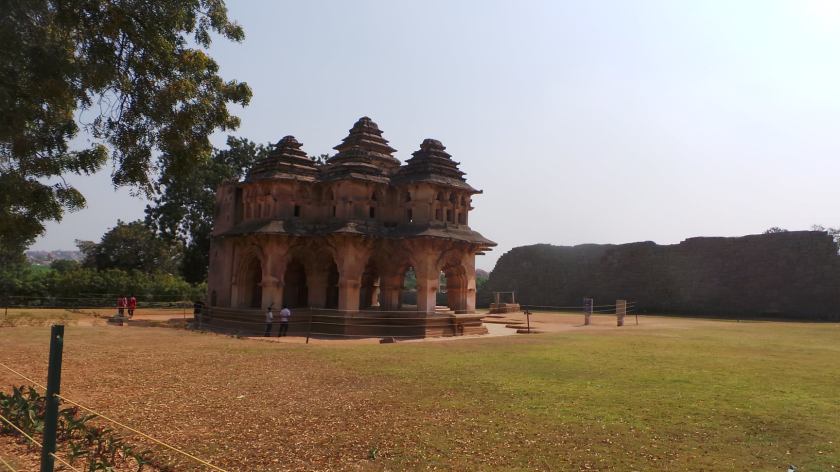
Lotus Mahal- Also known as Kamal Mahal, the Lotus Mahal is a two storied building, built symmetrically in form of a lotus. This building is believed to tbe the place for recreational activities for the Queen and also an area where the Kings could consult his counsel of ministers. The arched domes of the building and the lotus shaped symmetry, allow free passage of air in an otherwise dry , arid region and is believed to have kept the people at comfort from the weather. The walls and pillars of the Lotus mahal and intrinsically carved with birds, animals and various patterns, adorning the structure with a aritistic touch.
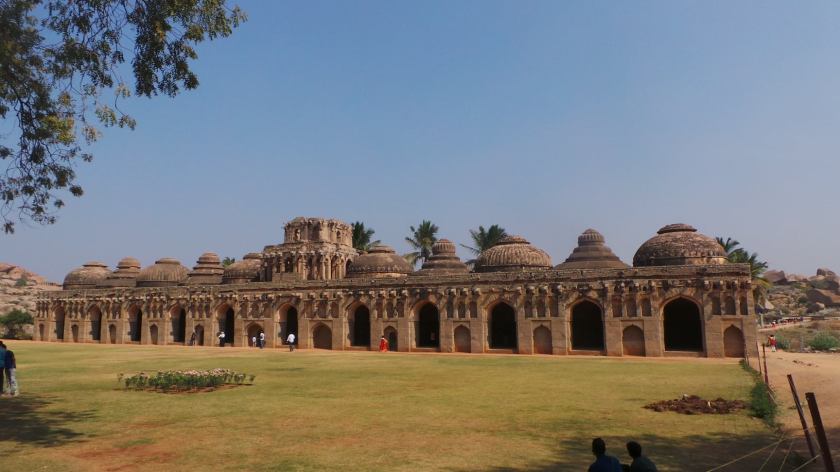
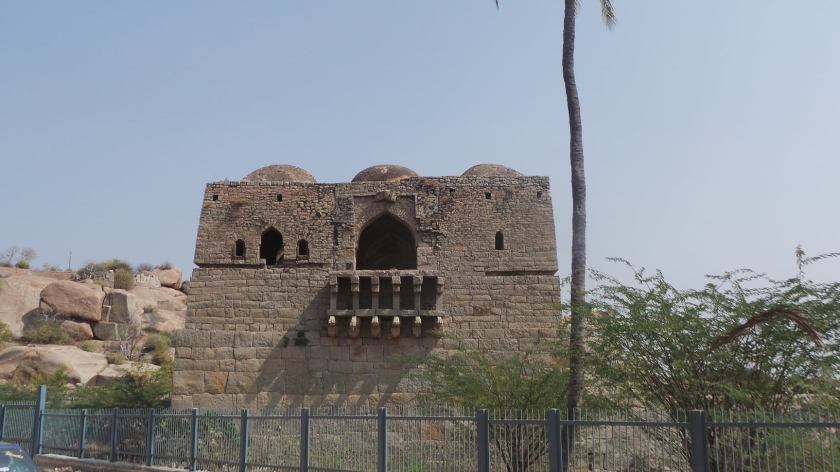
Elephant stable – a 11 domed, arched structure, resembling an Indo-islamic structure is believed to have homed the elephants belonging to the ruler. The centre structure of the stable is slightly on a higher dome, indicating it must have been kept for the elephant with the highest honour or the elephant of the King. The complete structure stands still with the time it has been put to disuse, leaving us to our imagination of the period when it would have been in full glory. Access to the tower from the base has been provided by means of a staircase.
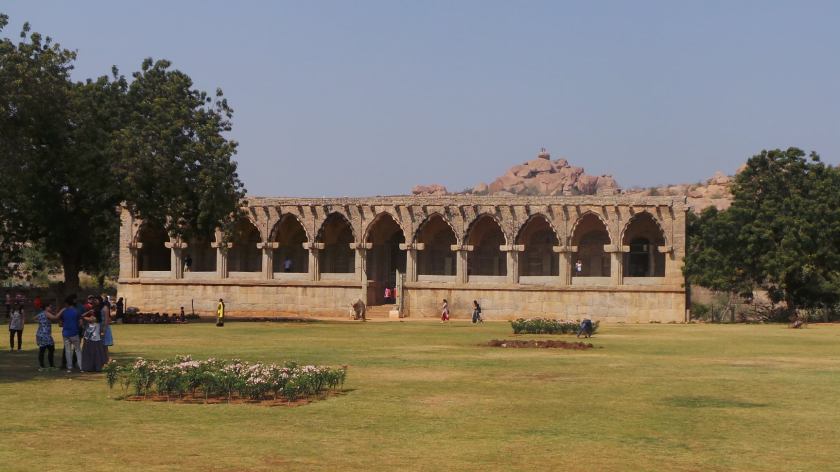
Perpendicular to the elephant stable is yet another 11 dome structure with an elevated platform, along with a passage door, indicating it must have been a place of embarking the huge elephants by the Kings & his ministers, as the elephant are bought out to be taken on the rides.
In yet another walled structure,popularly called as Royal enclosure slightly far away from the palaces, but inside the fortified precincts of the town of the Hampi, are various structures on a open ground . the ground seems to be the major area for various ceremonial functions that were held in this Town during the Vijayanagar Empire The area spreads out to almost 50000sq mtrs and is believed to be the nucleus of the Capital City and was protected by double lofty walls. The Royal enclosure is accessible through entrances on 3 sides of the enclosure. Various structures can be seen in the enclosure as under.
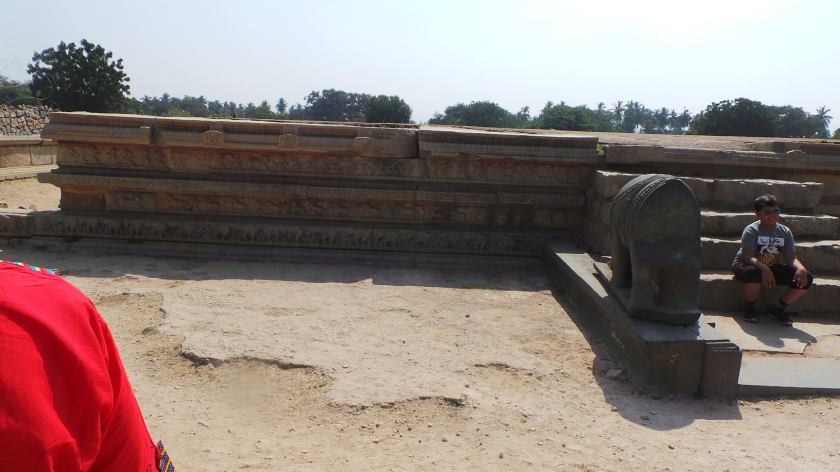
The Audience hall, stands slightly tall among various other structures of the area . The structure is on an elevated platform, and accessible few steps , is in the midst of a huge open ground. This hall is believed to to be the place where the King addressed his audience, but the lack of covering on the structure leaves one to imagination if it was a walled or pillared or an open structure where public could easily see their King.
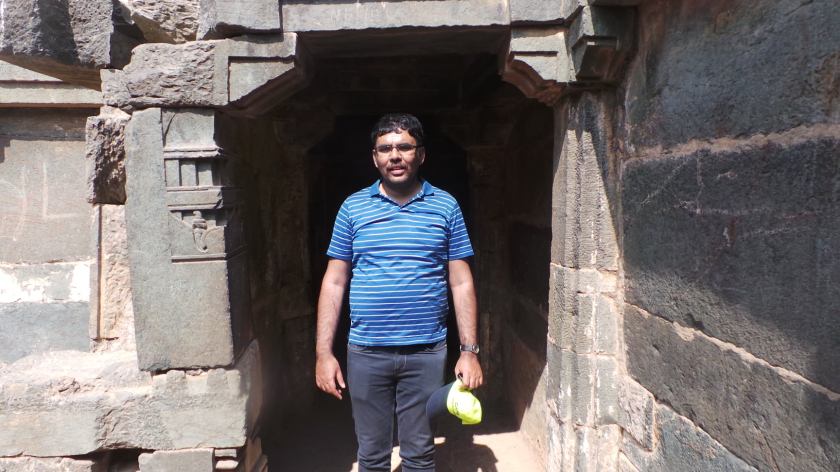
The Secret Tunnel is a walled structure with access below the ground, with an underground hiding area. The structure seemed to be a hiding structure for the complete people or an escape area in case of an unprecedented attack during the ceremonial functions . The area has been opened up from the top now for easy view by Public
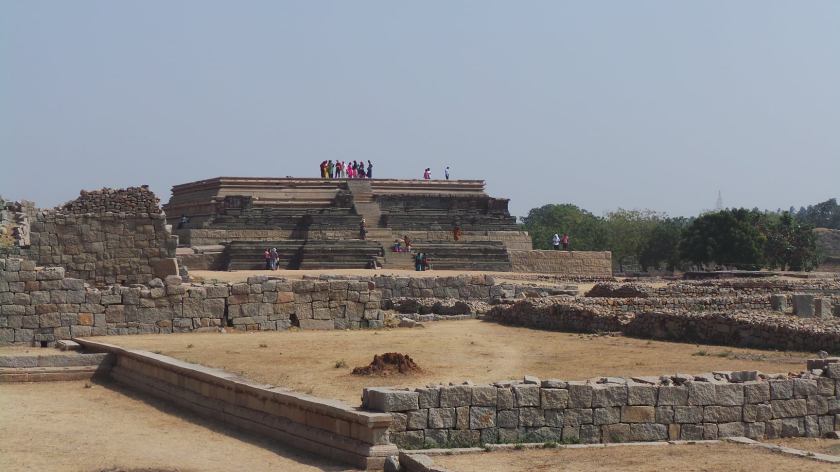
Mahanavami Dibba is one of the tallest structures in the ceremonial grounds, rising to almost an height of 8 metres. The structure has been constructed by granite and has been encased in sculptured schist stone. Steep flights of steps on either sides connect to the top. The extant pillar bases in the platform on the top indicate the presence of a pavilion on the top. This structure has been one of the major structures used during major festivals including Mahanavami (Shri Rama Navami or birth of Lord Shri Ram )
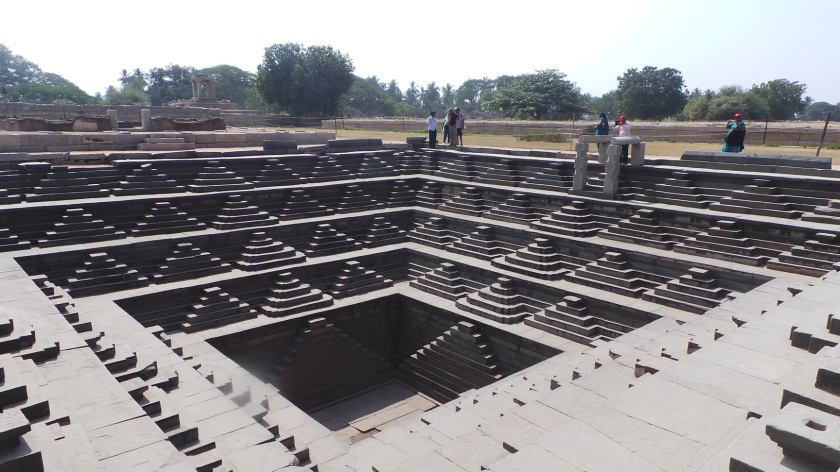
Stepped Tank is a beautifully ornamated tank with a flight of steps descending into the tank from the ground level. These tanks are believed to be used for a allowing worshippers and celebrators to have a dip in the water before the start of the related functions. One more similar stepped tank is found near the Shri Krishna Temple of the Town. These tanks were regularly watered with the water from the Tungabhadra river which runs close to the town.
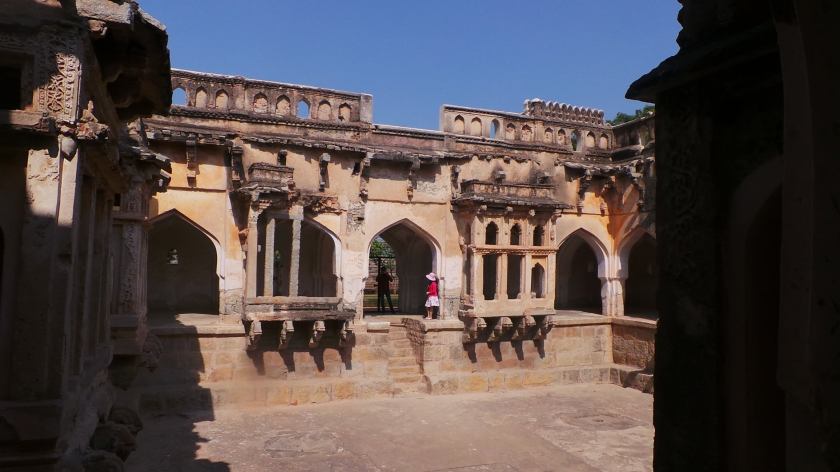
Queens bath is yet another structure in the Indo-Islamic architecture at the farther end of the Royal enclosure. The 4 sided structure is dome shaped and has a rectangular area, covered by pipes on all the 4 side and is a completely closed structure. The structure is two-tiered with private rooms on the 1st floor accessible by staircase inside the structure. The various pipes are fed with various ingredients such as natural scents, rose petals, hot water to keep the bath a refreshing affair. River water from Tungabhadra was fed by underground channels to feed this bath
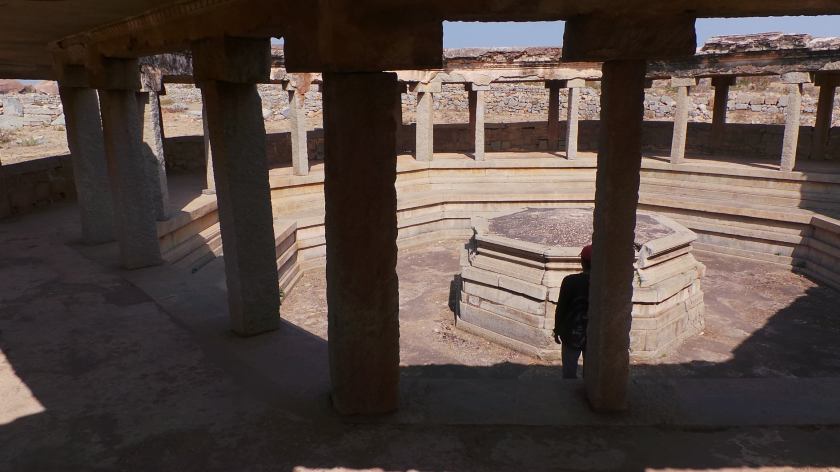
Octagonal Bath is a 8 sided structure , and is also called as Public bath, for travelers from the neighbouring villages or passerby’s to use during the time of festivals or occasions happening in the Town.
While the above form some of the structures found around the town that have survived the devastations, it is not to be forgotten that the Indian Architecture of Temple building had reached its Zenith during the period of Vijayanagar Empire. The various treasures acquired by the Vijayanagar rulers were used for constructing new temples and for renovation and restoration of the previous temples that were victims of various annexations in the South . The City of Vijayanagar , also had its grand share of Temples, which we will see in the next part

 South India- The Splendour!!
2 thoughts on “On the Banks of Pampa !! Part II- Vijayanagar!!”