For the earlier parts :
https://south-india-splendour.travel.blog/2020/06/21/on-the-banks-of-pampa-part-1-anegundi/
https://south-india-splendour.travel.blog/2020/06/24/on-the-banks-of-pampa-part-ii-vijayanagar/
The art of using rock edicts as a medium of communication , evolved in the 2nd Century B.C during the period of Emperor Ashoka of Mayura Empire, for the spread of non violence and spread of Buddhism . This slowly evolved into various types of rock cut architecture , starting from Viharas or place of stay and evolving into various temples formed out of stone, from the late 5th Century A.D. Aihole, in Karnataka, is believed to be the cradle of the Temple Architecture, where the earliest formed temples structures were found
The period of Vijayanagar empire in the later part of 14th Century , was the period when the temple architecture had reached the zenith. Temples had turned from mere places of worship, to a place of showcase the prosperity of the empire and the ruler. Temple construction, had evolved into a separate profession by itself, the various stones being chiseled by the skilled crafts in the hands of the sculptors to evolve into a mighty artistic feature , that showcased the prevailing trade and culture of the religion
Vijayanagar Empire, was located in the dry arid region of the Deccan plateau, where the presence of the boulders was abundant. The artistic manner in which the temples have evolved, have given little gap to differentiate where the temple ended and where the nature started. The temples had well blended into the background of the region, showcasing the splendor that the region once held. Till today, the visit to these temples , gives an idea of the richness of the kingdom that once stood in this region
The below are some of the grandeur structures that still dot on to this area:
- Vijaya Vittala Temple :
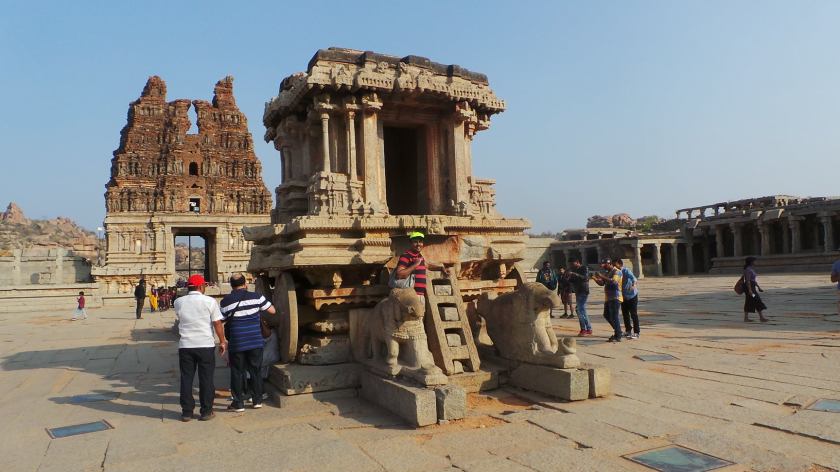
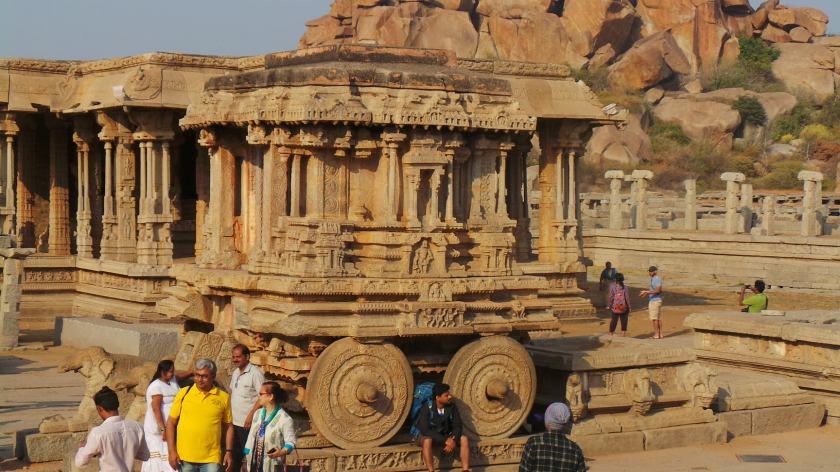
One of the most elaborate structure and the largest temple in this region, this temple is dedicated to Lord Vijaya Vittala, an incarnation of Lord Vishnu. The Temple is most famous for housing the stone chariot near the entrance, with an image of Garuda (Eagle), the vehicle of Lord Vishnu. This Temple, believed to be started during the period of Devaraya-II in early 15th Century, with elaborate additions added to it, during the period of Krishna deva Raya in the 16th Century
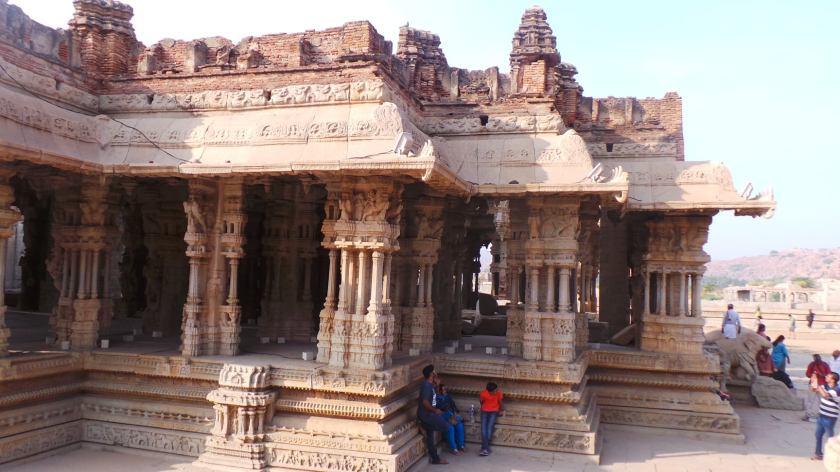
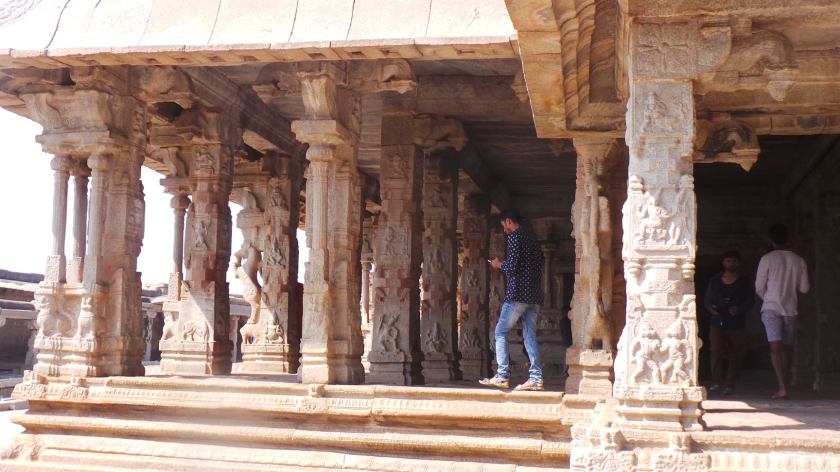
The Temple, has on a sculptured ornate plinth, the composite pillars of the sabha mantapa , which are designed as a clusters of slender pillars, some of them which produce musical notes when tapped gently. The hundred pillared mantapa to the southwest of the temple are carved with various depictions of Lord Vishnu and his other forms and are attributed to the period of Shri Krishna deva Raya . The stone chariot also consists of various paintings, painted close to its celings, using the natural colours available in that period.
The elaborate structure the temple was planned, looks like was left incomplete, for the entire town was plundered before the complete structure could be completed in the period. However, the completed halls and structures, gives an overall idea of what the structure would have been, had it been completed.
Enroute to the temple, is located the remnants of the old bazzar or market of the temple, the Gejjaala mandapa (A ornate structured hall which is believed to be a dancing hall) and Kudregombe mantapa (The hall of the horse structures)
- Hazara Rama Temple:
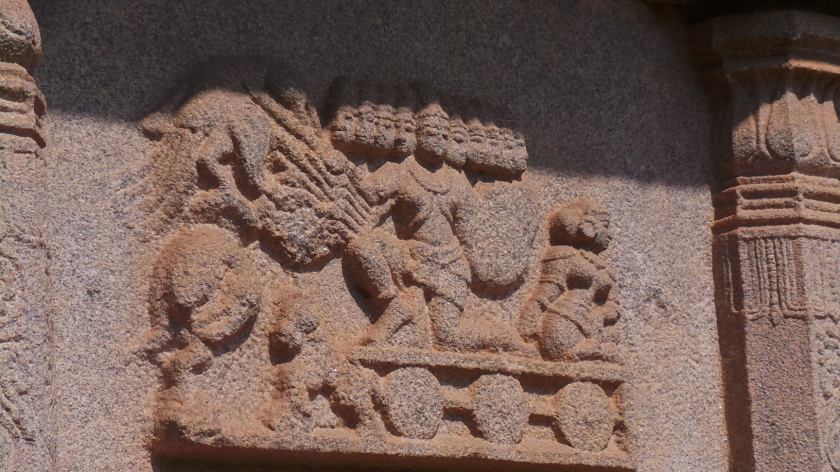
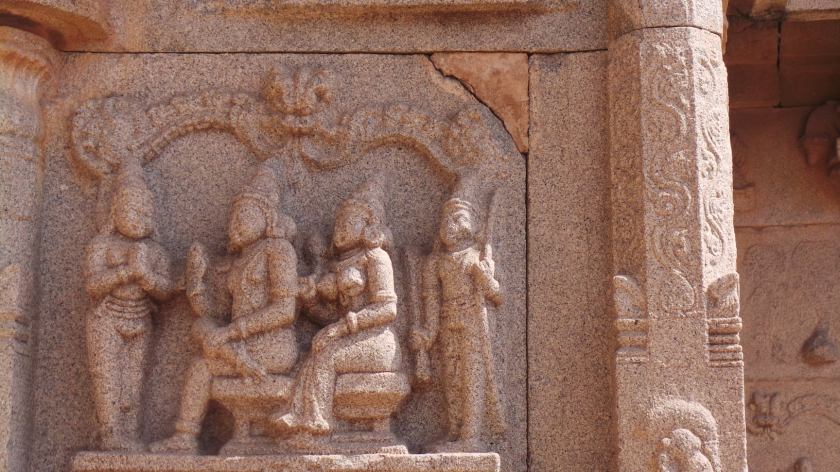
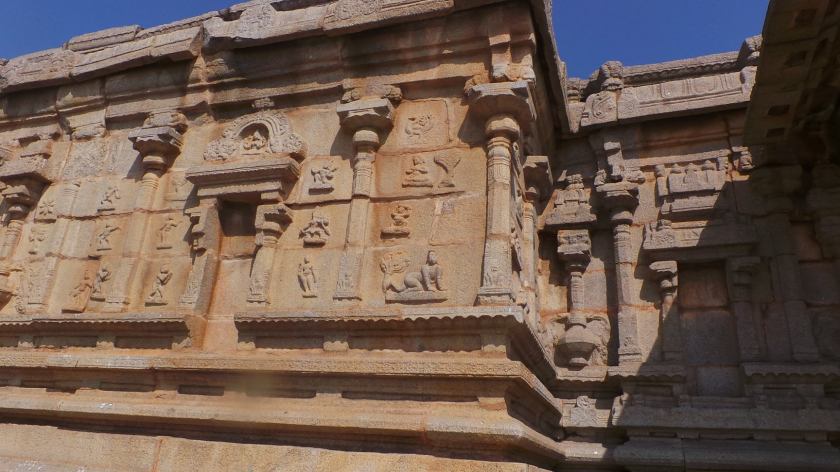
Yet another elaborately structured and completed temple of the Vijayanagar period, this is the only temple located between the residential and the ceremonial enclosures and has is believed to be a temple of Royal patronage. This Temple , dedicated to Lord Rama , an incarnation of Lord Vishnu, if known for its deep friezes, depicting the epic of Ramayana. Various scenes from the epic are described in narrative sculptures, running through the walls of the temples in various tiers and the story of Lava Kusha in the shrine of Devi Sita . The presence of the various sculptures of shri Rama, has given the temple the name of Hazara Rama (Hazara meaning 1000- A huge rounded off number).
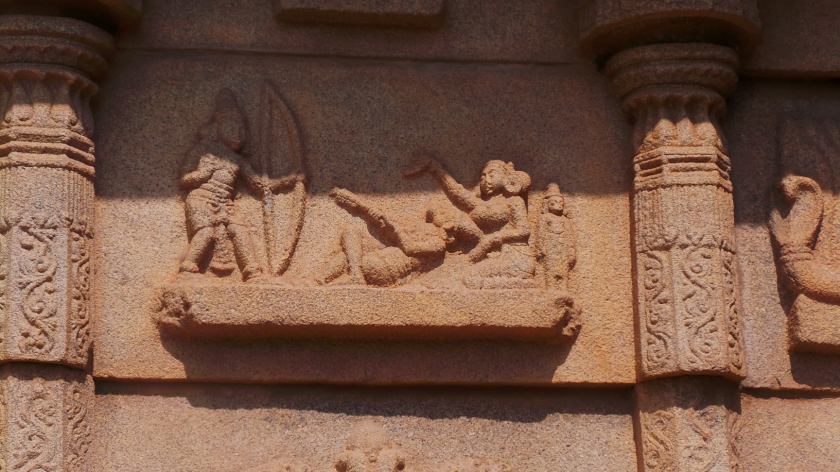
This temple, believed to be of the 15th Century period,is a complete structure with a Dravida Vimana, Sanctum, Pillared Dance hall, Pavillion and a separate dedicated shrine for the Goddess. The temple also has various sculptures from Krishna’ s childhood and one of the completed sculptured structure showing the level of architecture that had developed in our country by this period .
- Krishna Temple
Krishna Deva Raya was one of the famous rulers of the Vijayanagar Empire. During his expedition towards the East, he won over the Kalinga kingdom in the east during the early start of the 16th century . An idol of Balakrishna , was made out of a stone from the Kalinga region and was conscreated at this temple around 1513 AD. The Temple has main shrine , pillared pavilions and halls along with another shrine for the Devi, and also housed a kitchen and a store house. The walls and pillars of the temple houses many sculptures of Lord Vishnu and also episodes from Shri Krishna childhood and scenes from Bhagawat Puran The entrance of the temple opened to a large street with street bazaar and a sacred tank . This temple, being close to the fortified entrance bore the maximum ravage of the plunder, with the main idol of the temple being stolen by the plunderers
- Prasanna Virupaksha Temple
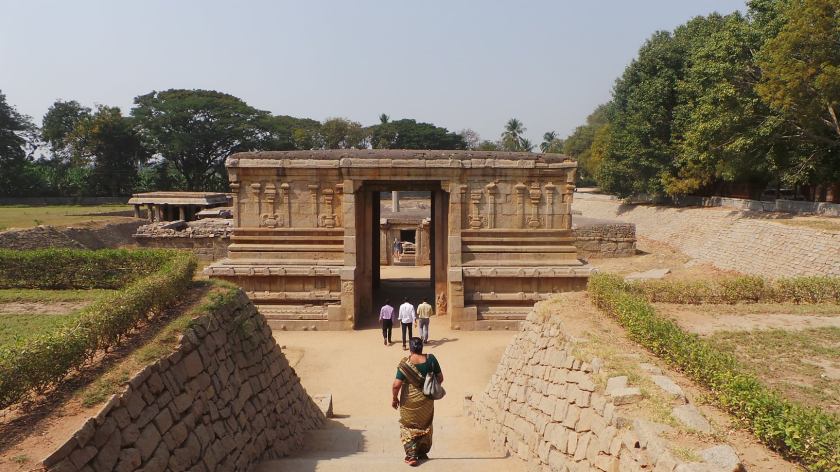
One of the oldest temple in the vicinity of Vijayanagar, this temple, is also famous as the underground Shiva Temple, for the current level of the temple is below the road level. The Temple has a Sanctum, aligned with a antarala, Ardhamantapa and Mahamantapa. The temple seems to have been built during the early part of the 14th Century, as the empire was being established, in the honour of Lord Shiva, and the pillars of the temple are completely plain. The temple , also has an inscription of Shri Krishnadeva raya donating the villages of Nagalapura area for the worship of the Lord for the merit of his parents.
The above Temples, are located within the precincts of the fortified town of Hampi . All the above temples have been taken over by the Archealogical survey of India and no ceremonies are performed at either of these temples. All these temples are open between 9AM and 5PM for public viewing.
The following temples and idols are located just outside the fortified city of Hampi:
- Lakshmi Narasimha statue
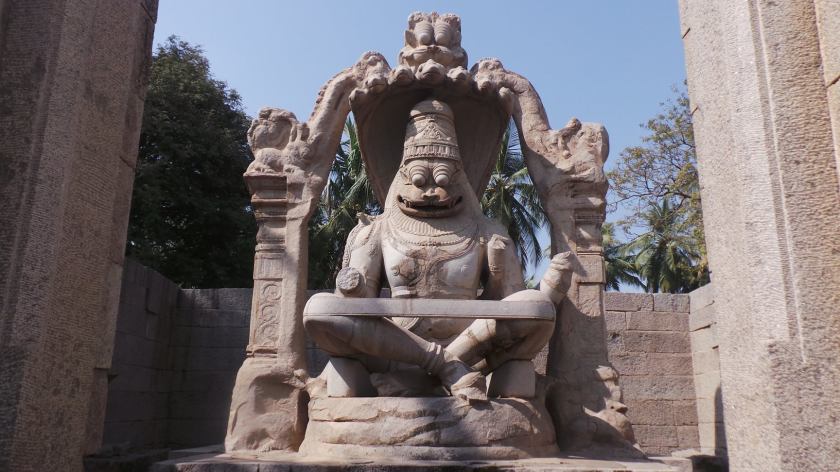
Just outside the pernicts of the Fortified town of Hampi, is a monolioth statue of Lord Narasimha, generally confused with Ugra Narasimha. This statue was conscreated in about 1528AD, on the behest of Shri Krishnadeva Raya. The Lord is seated , on a coiled Aadishesha with 7 hoods acting as a canopy ,and is at a height of 6.7 mtrs and is one of the finest example of Vijayanagar sculpture. Lack of a proper roof structure has resulted in wearing down of the structure and the statue of Devi Lakshmi , seated on the lap has gone missing. The face of the Lord has been damaged , which has led people to believe that the statue if of Ugra Narasimha or Narasimha in angry form.
- Badavi Linga :
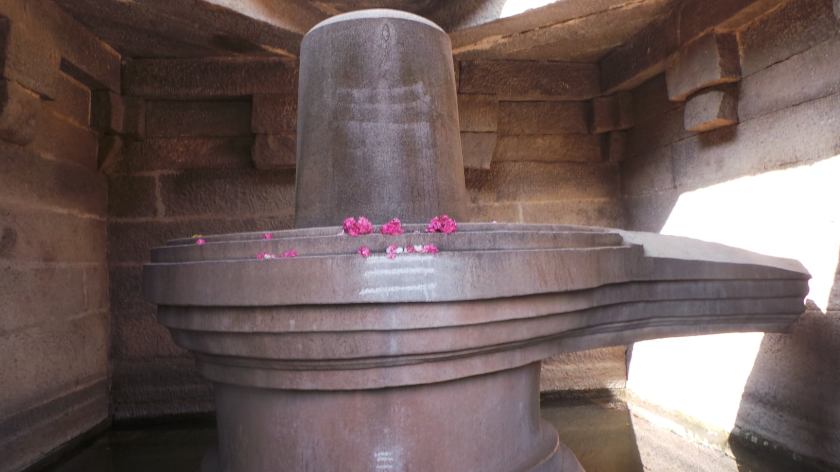
Badavi Linga or the Linga by the poor lady , is a 3 metres high Lord Shiva monolith statue which was built by a poor woman and remains in a bed of water . The statue of Badavi Linga is located right next to the statue of Lord Narasimha and is a fairly large pedestal , drawing into a outlet . The Central median eye has the 3-eyed mark.
- Chandikeshwara Temple
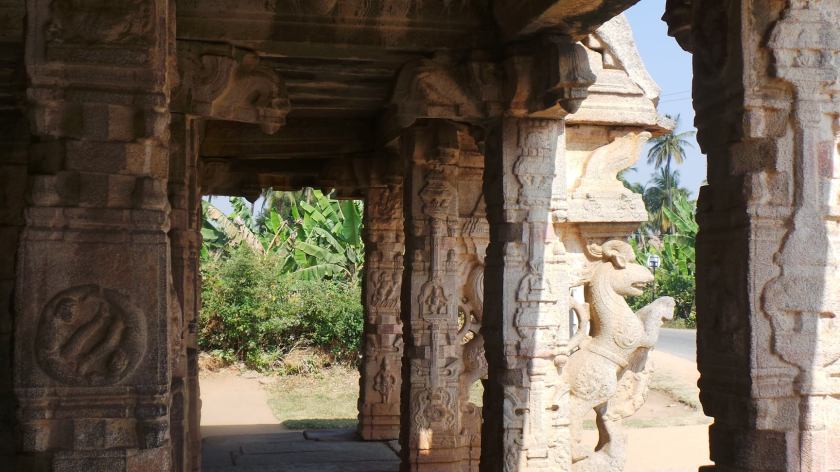
One of the few temples in the region built during the Vijayanagar period, dedicated to Lord Shiva. This Temple is believed to have been constructed in the 16th Century and has a temple plan of a Sanctum, Vestibule, a Mahamantapa and a Mukhamantapa. The pillars of the Mantapa has images of Lions trampling elephants, seemed to have been inspired from the Kalinga style of sculptures. However, the temples has various sculptures carved on the pillars, dedicated to Lord Vishnu and various Vaihnavite representations of Hanuman , Balarama , Yashoda Vamana and various others. The Sanctum has a image of Garuda supposedly facing the Lord, which gives an impression that the temple was originally formed as a Vishnu Temple and later replaced as a Shiva Temple. This Temple, like the above temples, are under the purview of ASI and no ceremonies are conducted
- Uddana Virabhadra Temple
Located right opposite to the Chandikeshwara Temple and Consecrated by Dalwayi Jangamayya in the 16th Century is the Uddana Virabhadra temple, dedicated to an incarnation of Lord Shiva. The statue of Virabhadra is almost 16 feet high and one of the largest statue of Virabhadra in the Vijayanagar region . The sculpture holds a well sculptured bow and arrow in upper left & right hand and a bow & shield in the lower left & right hand. This temple is located at the enterance to the town and is the Lord protecting the Town. This temple still has various ceremonies happening.
- Saraswati Temple
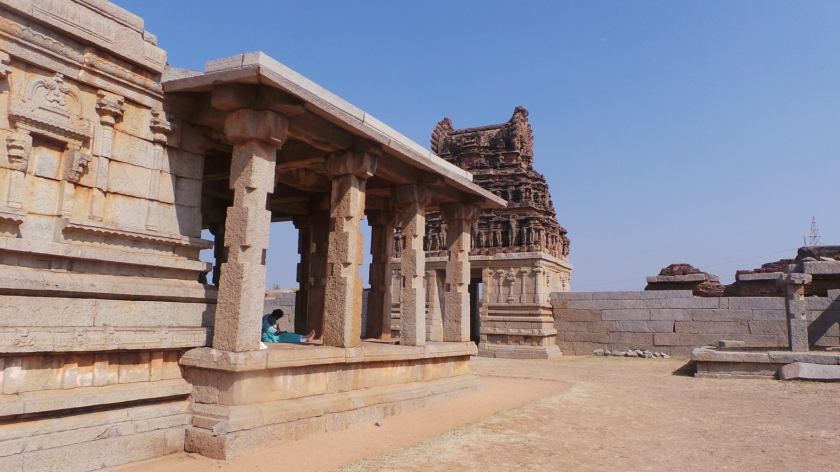
This temple, dedicated to Goddess Saraswati, is located in the middle of a huge barren land in middle of sand and boulders. The temples is completely devastated, but the mukhamantapa holds various well pillared sculptures.
Apart from the above temple, we do have the Virupaksha Temple on banks of Pampa River and the Malyavantha Raghunatha Temple on the Hillock outside the Town, which are also related to the period of Vijayanagar empire, already discussed in the previous parts. Apart from the above, there were various other temples across South India, including the famous Shri Varadaraja Temple in Kanchipuram, SriRanganatha Temple of Srirangam, Devi Meenakshi Temple of Madurai which also underwent various additions and modifications during the period of rule by the Vijayanagar Empire.
The above list completes the places of prominent landmarks in the town of Vijayanagar. Thanks for reading !!!!

 South India- The Splendour!!